
How to GEO: How to be found with your hotel in AI chatbots & AI systems
You've probably already noticed: artificial intelligence is radically changing the digital guest journey - from classic Google searches to chatbots such as ChatGPT or Google Gemini. More and more guests are no longer asking Google, but AI systems directly.
Die Herausforderung: Wer dort nicht auftaucht, wird auch nicht mehr gefunden.
Für Hotels heißt das: SEO bleibt wichtig – aber reicht nicht mehr aus. Sichtbarkeit muss neu gedacht werden: Stichwort GEO – Generative Engine Optimization. Der Fokus liegt auf klaren, strukturierten Inhalten, die exakt auf die Nutzerintention einzahlen.
How hotels become visible in ChatGPT, AI Overviews & Co.
What you need now:
- Inhalte klar und logisch strukturieren
Nutze prägnante Überschriften, kurze Absätze und klare Aussagen. So verstehen auch KI-Systeme, worum es geht. - Typische Gäste-Fragen direkt beantworten
Beispiel:
„Gibt es Parkplätze?“
„Ist das Frühstück inklusive?“
Solche Infos sollten direkt auf deiner Seite stehen – am besten als FAQs. - Strukturierte Daten (Schema.org) nutzen
Öffnungszeiten, Zimmerpreise, Verfügbarkeiten oder Bewertungen – in maschinenlesbarer Form helfen sie KIs, deine Inhalte richtig zu interpretieren. - E-E-A-T stärken: Erfahrung, Expertise, Autorität & Vertrauen
Zeige, warum Gäste dir vertrauen können: mit Bewertungen, Teamvorstellungen, Auszeichnungen oder Presseartikeln. - Regionale Sichtbarkeit erhöhen
Nutze lokale Keywords wie „Wellnesshotel Lüneburger Heide“ oder „Hotel am See in Bayern“. Das hilft bei sprachgesteuerten Suchen enorm. - Inhalte aktuell halten
Saisonale Angebote, Blogartikel oder News zeigen, dass deine Seite lebt – und das liebt die KI. - Deine Marke stärken
Je öfter dein Hotelname im Web auftaucht (z. B. in Foren, Artikeln oder Social Media), desto höher die Chance, dass er in KI-Antworten genannt wird. - KI-freundlich texten
Klar. Einfach. Verständlich. So verstehen auch ChatGPT & Co., worum es bei dir geht – und geben dein Angebot korrekt wieder.
GEO - what this means in concrete terms for the hotel industry
Mit dem Aufstieg von KI-gestützten Systemen wie ChatGPT, Gemini & Co. wird
Generative Engine Optimization (GEO) zum Gamechanger für deine Sichtbarkeit im Netz. So profitiert dein Haus davon:
Hotels:
- Store structured data - e.g. on room prices, availability, ratings or opening hours. This way, the AI understands what you are offering.
- Answer typical guest questions directly - such as "Is breakfast included?" or "Is there parking on site?"
- Publish blog articles with real travel experiences or tips from employees - this strengthens personality and trust.
- Certifications and awards show - they increase your authority and credibility.
Restaurants:
- Make opening hours, menus & reservation options machine-readable - with the help of structured data (Schema.org).
- Use local keywords in a targeted manner - such as "best Italian restaurant in [city]" or "vegan restaurant in the old town".
- Highlight the qualifications of the kitchen team - e.g. through portraits, interviews or awards.
- Integrate guest reviews & press articles - for more trust and visibility.
Trust me, I'm a hotelier!
E-E-A-T
steht für
Erfahrung, Expertise, Autorität und Vertrauen
– und ist nicht nur für Google ein wichtiges Qualitätskriterium, sondern auch für KI-Systeme wie ChatGPT & Gemini.
Especially in the hotel and catering industry, where trust plays a major role, you should rely on E-E-A-T. Because: content with real substance is preferably displayed - by people and machines.
What this means for hotels:
- Publish blog posts with travel experiences or tips from hotel employees
- Present certifications and awards to emphasize your authority
- Use press mentions and guest testimonials in a targeted manner - they strengthen trust in your offering
And for restaurants:
- Highlight the qualifications of the chef and service team - with faces if you like
- Prominently integrate customer reviews and press articles - ideally directly on the homepage or the online menu
AI overviews & new SERPs: what hoteliers should know now
Hier sehen wir im SEO-Tool Sistrix, welche Seiten mit welchen Keywords im Google AI Overview gezeigt werden:
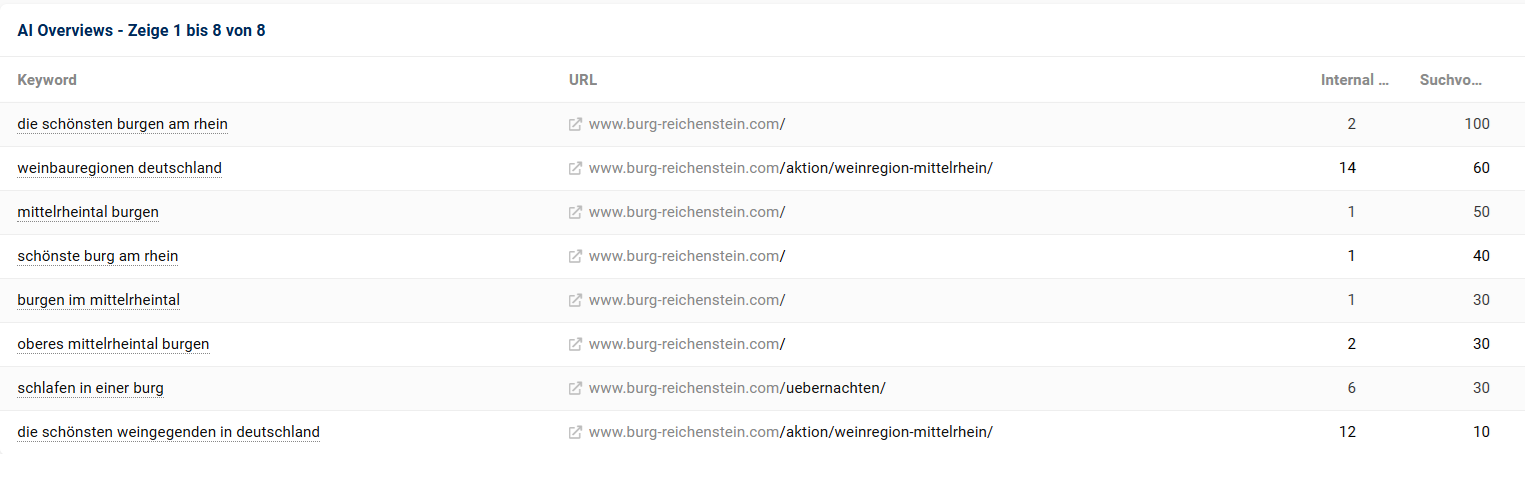
Die klassischen Suchergebnisseiten (SERPs) verändern sich rasant – vor allem durch die Einführung von AI Overviews, die direkt auf der Google-Ergebnisseite kompakte Antworten liefern. Das bedeutet: Viele Nutzer klicken gar nicht mehr auf die eigentlichen Websites.
Doch keine Sorge, du kannst etwas dagegen tun! Wenn deine Inhalte
klar, präzise und KI-lesbar
aufbereitet sind, tauchen sie direkt in diesen neuen Formaten auf.
That's why it's worthwhile for hotels:
- Optimize content for featured snippets to be visible in AI overviews
- Present offers and services compactly and clearly on the website
- Answer questions directly, preferably directly on the homepage or in an FAQ section
And for restaurants?
- Create FAQ pages that answer frequently asked questions about opening hours, reservations or menus
- Use structured data to appear in rich snippets with ratings, dishes or prices
Diese Entwicklungen zeigen klar:
Hotels und Restaurants müssen ihre Online-Präsenz kontinuierlich weiterentwickeln, um in der sich wandelnden SEO-Landschaft sichtbar zu bleiben.
Das bedeutet:
KI-Integration, E-E-A-T-Umsetzung und die Anpassung an neue SERP-Formate
sind kein „Nice to have“, sondern entscheidend für den zukünftigen Erfolg.
Conclusion: GEO = SEO taken further
Many of the basic principles of classic SEO still apply - they just need to be adapted more specifically to the way AI systems work.
What counts at GEO:
- Clear structure & understandable language
- Directly answered questions (FAQs!)
- Schema.org & structured data
- E-E-A-T as an anchor of trust
- Up-to-date content & strong brand
Which still applies:
- Clean technology (meta data, links, loading time)
- Mobile first & good user experience
- Backlinks & brand mentions are still worth their weight in gold
- Keywords remain relevant - now in a semantic context
Kurz gesagt:
GEO ist kein radikaler Umbruch – sondern die nächste, logische SEO-Stufe.
How to make your hotel or restaurant fit for GEO & AI
Die Umstellung auf GEO und KI-getriebene Suchsysteme mag komplex wirken – aber Schritt für Schritt lässt sich die Sichtbarkeit deutlich verbessern. Technische Basics, die richtige Content-Strategie und vertrauensbildende Inhalte (E-E-A-T) sind dabei die Schlüssel.
Wer sich jetzt schon mit den Veränderungen beschäftigt und die eigenen Inhalte entsprechend anpasst, sichert sich langfristig einen Platz im Blickfeld von Gästen – sowohl bei klassischen Suchmaschinen als auch bei Chatbots und AI-Systemen.
Wenn du Unterstützung suchst, helfen wir dir gern dabei, deine Website fit für die Zukunft zu machen. Ob technische Optimierung, strukturierte Daten, maßgeschneiderte Inhalte oder Checks zur Vertrauenswürdigkeit – gemeinsam sorgen wir dafür, dass dein Hotel oder Restaurant nicht nur in klassischen Suchmaschinen, sondern auch in Chatbots und AI-Systemen sichtbar bleibt.
Melde dich bei uns!
Photos:
Marten Newhall, Souvik Banerjee
Latest Articles