AI meets old values: The 9 hotel marketing trends for 2026
2026 ist Hotel Marketing smarter als je zuvor – und gleichzeitig wieder menschlicher.
Künstliche Intelligenz (KI) erstellt Texte, automatisiert Kampagnen und beantwortet rund um die Uhr Gästefragen. Effizienz ist ein Muss, Daten sind wertvoll.
However, with the increasing technologization of marketing, there is a growing longing for what machines cannot do: genuine communication, connection, and emotions. Guests don't just want to feel at home; they also want to be understood. Not pretended, but addressed.
This is precisely the challenge posed by hotel marketing trends in 2026: successful marketing results from the interaction between data and AI, visibility and discoverability, trust and communication, as well as emotion, people, and brands.
The key question is therefore not: how much AI do we need? But rather: how do we use it without losing our personality?
Data, AI & Efficiency
1. Your own guest data is worth its weight in gold
Bei den Hotel Marketing Trends 2026 zählen First-Party-Gästedaten zu den entscheidenden Hebeln. Damit sind sämtliche Daten gemeint, die Hotels eigenständig zusammentragen – etwa über ihre Website, Buchungen, Newsletter oder vergangene Aufenthalte.
Wer Kenntnis darüber hat, welche Gäste was buchen, wann sie reisen und woran sie interessiert sind, kann seine Kommunikation zielgerichteter gestalten. Genau das ist es, was den Unterschied zwischen effektivem Marketing und solchem ausmacht, das lediglich Geld kostet.
Kurz gesagt: Je besser Hotels ihre eigenen Daten kennen, desto unabhängiger werden sie von OTAs und Rabattschlachten.
In der Praxis zeigt sich jedoch oft: Die Daten sind zwar vorhanden, aber über verschiedene Systeme verteilt – und ihr Potenzial bleibt ungenutzt. Deshalb wird ein zentrales CRM-System relevant. Es hilft Hotels dabei, ihre First-Party-Gästedaten sinnvoll zu bündeln, zu priorisieren und als Arbeitsgrundlage für Marketing und Kommunikation nutzbar zu machen.
Wenn du noch unsicher bist, welches CRM sinnvoll für dein Hotel ist, kann eine
Systemberatung hilfreich sein.
2. AI becomes a practical helper—not a replacement
And this is precisely where AI comes into play. Not as a substitute for effective marketing, but as a useful assistant in the background. Artificial intelligence takes over routine tasks: initial drafts, analyses, brainstorming, or straightforward processes. This saves time. And hotels can use this time where it really counts: with their guests. Or to put it another way: AI takes care of the tasks while people take care of the relationships.
3. Marketing is becoming more targeted rather than louder
However, collecting guest data is only the beginning. Its true value only becomes apparent when hotels use it sensibly.
Abandoning scattergun marketing will therefore be one of the most significant trends. Instead of addressing all guests with the same message, regardless of whether it is relevant to them, hotels are focusing on data-based ecosystems.
It sounds complex, but it's easy to understand: websites, booking engines, CRM, newsletters, and guest communication work together instead of independently. This clarifies the situation:
- What is there interest in, and from whom?
- When is the ideal moment to make a speech?
- Which message is the right one?
The result: less wasted coverage, more efficient use of the budget, and marketing measures that appear to guests as a suitable offer—not as advertising.
Visibility & discoverability
4. Guests ask, hotels answer — The role of GEO
Wer die Bedeutung von
Social Media und Suchmaschinen ernst nimmt, muss dort auch Antworten liefern. Moderne Suche funktioniert heutzutage nicht mehr nur über klassische Suchmaschinen, sondern zunehmend über KI-basierte Systeme wie Chatbots, Sprachassistenten oder generative Suchergebnisse.
Hier kommt
Generative Engine Optimization (GEO) ins Spiel. Gemeint ist die Optimierung von Inhalten für KI-gestützte Such- und Antwortsysteme. Anders als bei klassischem
SEO, geht es dabei weniger um Keywords, sondern um klare, strukturierte und verständliche Antworten auf typische Gäste-Fragen. Hotels, die transparent kommunizieren – zu Lage, Frühstück, Wellnessbereich oder andere Besonderheiten –, werden von diesen Systemen häufiger ausgespielt. Anders gesagt: Wer Klartext spricht, wird gefunden. Und wer gefunden wird, wird gebucht.
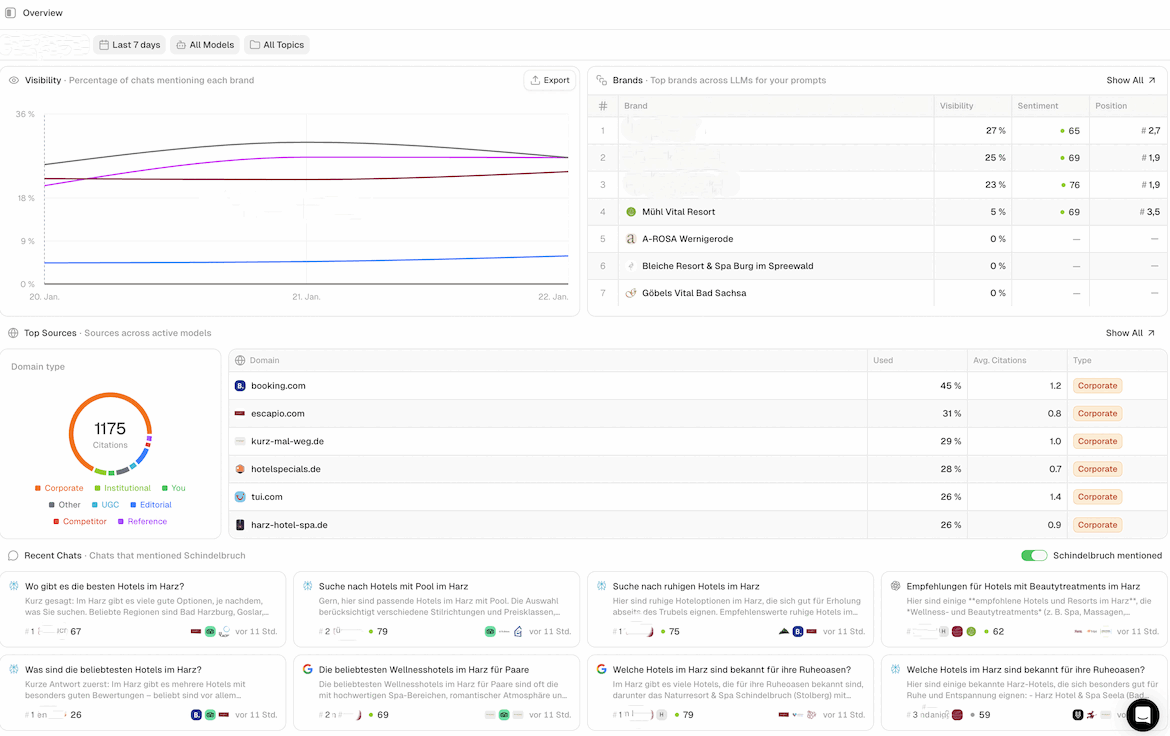
Um genau diese neue Form der Sichtbarkeit greifbar zu machen, nutzen wir bei XPORT ein spezielles Tool. Es zeigt, wie Hotels in generativen Suchsystemen erscheinen, welche Informationen dort ankommen – und wo noch Potenzial liegt.
Melde dich gerne bei uns, wenn du mehr erfahren möchtest.
Dashboard GEO tool
5. Social media is becoming a search engine
Im Jahr 2026 sind Instagram und TikTok weit mehr als nur schöne Bildergalerien. Gäste nutzen Social Media aktiv zur Recherche – auch bei der Hotelsuche.
Der erste Eindruck ist entscheidend. Der kann sich häufig in nur wenigen Sekunden entwickeln.
Gäste wollen schnell verstehen:
- Who is this hotel for?
- What makes it special?
- Is it right for me?
Nicht Perfektion überzeugt, sondern Klarheit. Und ehrliche Einblicke schlagen Hochglanz.
Trust & Communication
6. First impressions count
Nowadays, the first contact with a hotel rarely takes place at the reception desk. It's usually done digitally—and sometimes faster than you might think. Just a few minutes can determine whether a booking is made or not.
Typical situations:
- An email inquiry remains unanswered for one day.
- An Instagram message gets lost in the mailbox.
- An automated response sounds cold or impersonal.
All das sind Kleinigkeiten, die für Gäste trotzdem entscheidend sind. Hotels, die hier schnell, klar und freundlich reagieren, erhöhen ihre Buchungschancen deutlich. Der Ton macht dabei genauso viel aus wie das Tempo. Ein persönlicher Einstieg und eine freundliche Antwort wirken oft stärker als das beste Arrangement.
Der erste Eindruck ist längst Teil des Marketings – und einer der wichtigsten Hebel für Vertrauen.
7. Trust is good, long-term relationships are better
Ein einzelner Influencer-Post kann Aufmerksamkeit bringen. Vertrauen entsteht aber nicht von heute auf morgen. Deshalb setzen Hotels 2026 verstärkt auf langfristige Creator-Partnerschaften statt auf einmalige Aktionen. Wenn Menschen ein Hotel immer wieder im gleichen Kontext sehen, wächst Glaubwürdigkeit — und dies erhöht die Wahrscheinlichkeit, dass sie deine Gäste werden.
Entscheidend ist dabei nicht die Reichweite einzelner Posts, sondern die Passung zwischen Creator, Zielgruppe und Hotelmarke. Langfristige Kooperationen ermöglichen konsistentes Storytelling, authentische Einblicke und Inhalte, die über Social Media hinaus genutzt werden können.
Nachhaltiges Influencer Marketing beginnt bei der Auswahl passender Creators und endet bei wiederkehrenden Formaten, die Vertrauen aufbauen.
People, brands, emotions
8. Feelings > Equipment
Gäste buchen kein Zimmer. Sie buchen ein Gefühl.
Ruhe, Herzlichkeit, Spannung, Genuss – das sind die wahren Buchungsanreize. Atmosphäre, Tonalität und Bildsprache wirken oft stärker als Sterne, Quadratmeter oder Ausstattungslisten. Hotels, die ihr Gefühl klar transportieren, bleiben im Kopf – und im Herzen.
Ein Beispiel:
So klingt es oft: „Modern ausgestattete Zimmer mit 28 m², Balkon, WLAN und Boxspringbett.“
So klingt es besser: „Ein Rückzugsort zum Ankommen & Durchschlafen – mit viel Licht, Blick ins Grüne und genug Raum, um den Alltag hinter sich zu lassen.“
Beide Beschreibungen sprechen über dasselbe Zimmer. Doch nur eine davon erzeugt ein Bild im Kopf. Emotionale Sprache hilft Gästen, sich vorzustellen, wie sich ein Aufenthalt anfühlen wird – und genau das beeinflusst die Buchungsentscheidung.
9. Technology in the background, relationships in the foreground
Automation will be standard by 2026. Smoother workflows, faster access to information, more efficient processes. This is precisely where technology reveals its greatest value: in the invisible.
However, what guests remember is something else. Not the system. Not the tool. But the feeling of being welcome. The way they are welcomed. The attitude with which a team presents itself. The little moments that seem unplanned – but stick in the memory. Precisely because so much is automated, these human moments become more valuable. They are difficult to imitate and make the difference between a functioning hotel and a strong brand.
Conclusion on hotel marketing trends for 2026
Es ist kein Entweder-oder: Nicht KI oder Mensch – sondern KI für den Menschen.
Die erfolgreichsten Hotels setzen Technologie ein, um ihre Effizienz zu steigern, während sie gleichzeitig in Emotionen, Kommunikation und Bindung investieren. Wer das versteht, gewinnt nicht nur Sichtbarkeit – sondern Vertrauen und langfristige Gäste.
Photos:
Gemini, ANTONI SHKRABA production
Latest Articles