
4 Dangers with Trivago, Google Hotel Ads & Co.
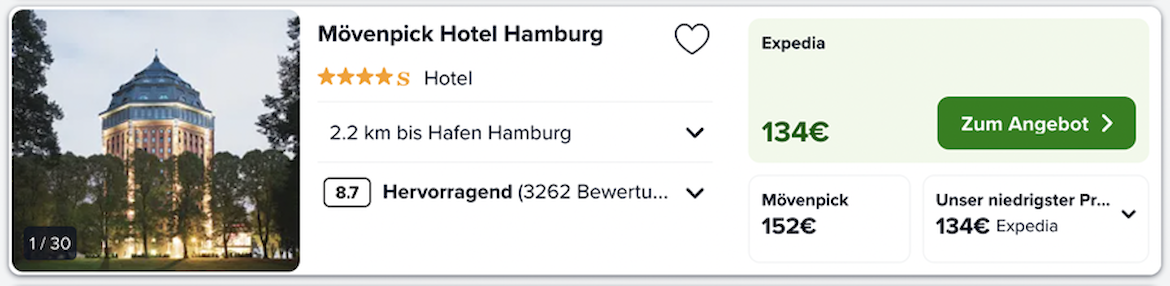
Most of you have already used them yourselves: Trivago, Google Hotel Ads or TripAdvisor are the showcases of hotels and ideally ensure many direct bookings. Bundled under the name metasearch channels, hotel prices from Booking, the hotel website and other portals can be compared there. On Trivago alone, 45 million users search for inspiration for their trip every month.
Danger #1: CPC bids that are too high or too low
Practice makes perfect and expertise is hard cash. If you want to link your website on the metasearch channels, you have to bid for it. The right measure ensures that you are still displayed in the top positions, but don't pay too much. The channels must be considered individually here: On TripAdivsor or Google, the top rankings differ only slightly and even a position 2 or 3 ranking is perfectly adequate. With Trivago, on the other hand, position 1 is clearly emphasized. This ensures more clicks, but also more costs. If the corresponding bookings do not materialize, you should perhaps be satisfied with a lower position. Different bids according to length of stay, arrival date or end device are the cherry on top.
Solution: A good rule of thumb is an ROI of 10 or higher. If your ROI falls below that level over the long term (there will always be fluctuations), your strategy should be adjusted. After all, we want to acquire direct bookings at a lower cost than OTA bookings.
Danger #2: Cheaper room rates with OTAs

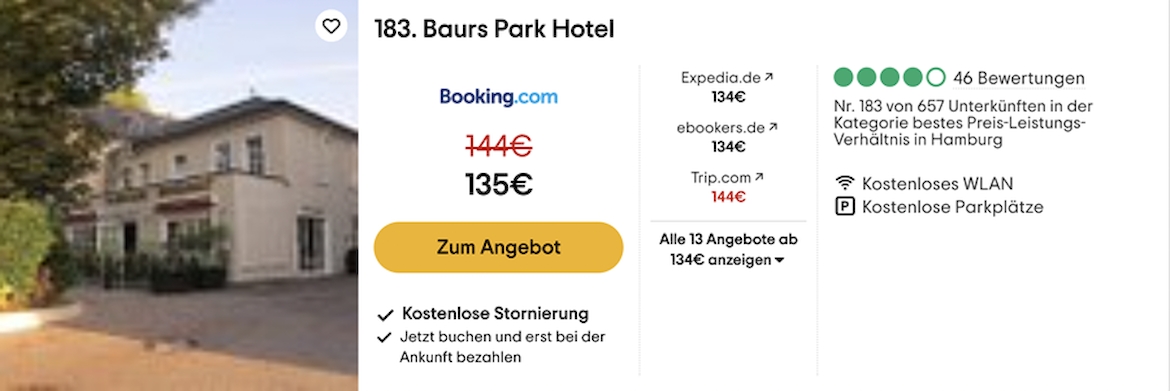
A true classic. If your rates on the OTAs are cheaper than via your own channels, this will not only cause your metasearch strategy to falter. Your entire channel mix will also suffer - to the detriment of free direct channels.
Solution: Metasearch channels should be
checked several times a week . If prices on Booking and similar sites are lower than those on your own website, you need to find the cause and fix it.
Danger #3: Outdated company entries
Filtered out and therefore no visibility. This can happen to any hotel that does not keep its company profile up to date on the metasearch channels. Does your hotel offer vegetarian or vegan food, have sustainability certificates or welcome dogs? If this attribute is not stored in your profile, you will not be shown to guests who filter for exactly this.
Conclusion: Since the various search engines—and Google in particular—are constantly adding new attributes, it’s a good idea to at least once a quarter to review your profile and check whether everything is still up to date.
Danger #4: Poor image quality or meaningless images

Love at first sight. This is often the case when choosing a hotel. The visual language is of decisive importance here. If an unflattering image with no impact or an image of poor quality is chosen as the cover image, the probability that the user will simply scroll on increases considerably.
Solution: Just as with the profile check, the stored images should be reviewed every quarter . Are all the images up to date? Is my cover photo appealing?
Looking for professional metasearch support?
You aren't currently using any metasearch channels at all, or you simply want to explore your platforms to
hidden potential ? XPORT is here to help with its
many years of expertise —from technical integration and initial setup to ongoing strategic consulting and our full-service management.
Photos:
TripAdvisor, Trivago